.png)
Why Last-Minute Events Are Not Always a Disaster

Written by Paul Tompsett, Head of Production, Studio Cube Published: 14 September 2026 Last updated: 14 September 2026 Reading time: 9 minutes
Paul Tompsett is Head of Production at Studio Cube, a London-based full-service event production company. With more than 20 years of experience delivering luxury retail activations, charity events, conferences and corporate hospitality across the UK, Europe and the USA, Paul has planned events with six months of preparation and others where the timescale was measured in days. He knows from direct experience what actually determines whether a short-turnaround event succeeds.
Key takeaway: A short lead time does not automatically make an event difficult. Indecision, unclear budgets and changing briefs cause far more problems than a genuinely last-minute event with clear objectives and quick decision-making. The real question is not how much time you have. It is how many decisions still need to be made.
Why Last-Minute Events Are Not Always a Disaster
Last-minute event planning does not automatically produce chaotic or expensive events. Research shows that the primary causes of event problems are unclear objectives, slow decision-making and changing briefs rather than short lead times. A client who can confirm the objective, budget, guest count and decision-making authority immediately gives an experienced event production team everything it needs to deliver a successful event in a fraction of the time most people assume is necessary.
After more than 20 years working in events, I have planned events with months of preparation and others where the timescale has been measured in days. You might assume the events with the longest lead times were always the easiest. They were not.
I have seen events with months of planning become unnecessarily complicated because decisions were never made. I have also seen extremely short-turnaround events come together remarkably smoothly because the client knew what they wanted, the budget was clear and everyone involved was empowered to act.
That is why I do not think the real question is how much time do we have. The real question is how many decisions still need to be made.

Can you really organise an event at the last minute?
Yes. Many events can be successfully organised at short notice, particularly receptions, dinners, product launches, press events, retail activations and corporate events. But there is an important distinction between an event that starts late and an event that is decided late.
If you have three weeks but spend the first two debating the venue, changing the guest numbers and waiting for budget approval, you do not really have a three-week planning period. You have one week. By contrast, if a client approaches us with seven days to deliver an event and can immediately confirm the objective, budget, guest numbers and key requirements, we can start solving the problem straight away. That is a completely different situation.
According to research from Eventbrite, 42 percent of event planners say that unclear objectives and late decision-making are more disruptive to event delivery than insufficient lead time. The timeline is rarely the constraint. The decision-making process almost always is.
The biggest advantage of a short deadline
Strangely, one of the advantages of last-minute events is that there simply is not time to overthink everything. And overthinking can be expensive.
I have worked on events where decisions have gone through multiple rounds of discussion only to end up back at something remarkably similar to the original proposal. Meanwhile availability has changed, supplier deadlines have passed and costs have increased. Research consistently shows that last-minute change orders increase overall event spend by 10 to 20 percent regardless of how much lead time was originally available. Much of that cost comes not from the changes themselves but from the delay in making them.
A short lead time creates focus. Do we need this? Does it improve the guest experience? Can we deliver it properly? Is it within budget? Yes, book it. No, move on. That discipline can actually make an event better. Some of the strongest events I have produced have been relatively simple, focused and decisive. Not because there was no choice but because there was no time to make the wrong one.
When late decisions cause more damage than late events
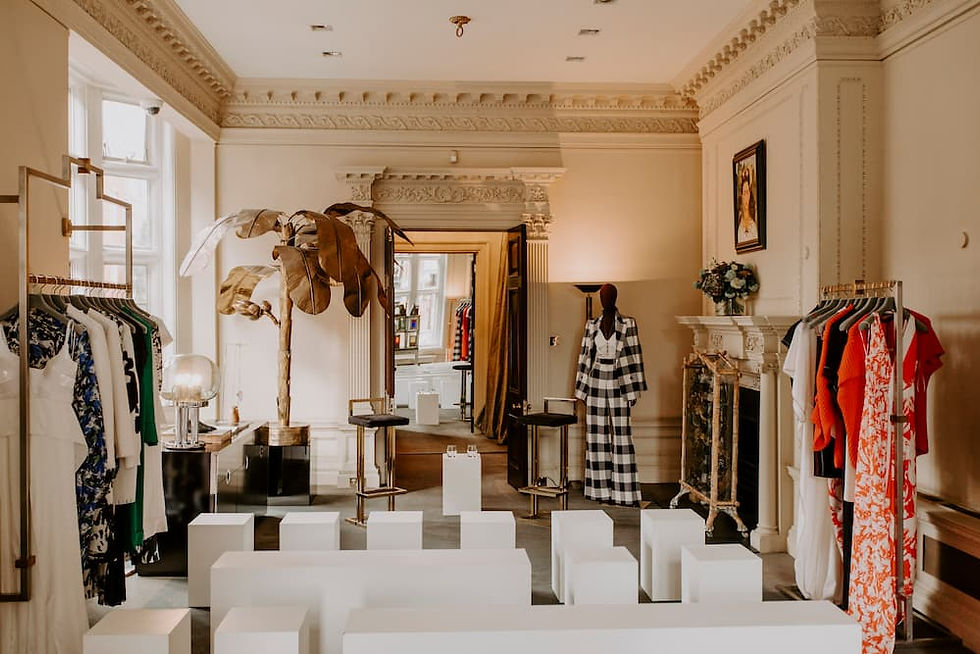
One fashion event we worked on illustrates this perfectly. Elements of the original proposal were removed because the budget was reduced. Later, as the event approached, some of those elements were reinstated. We could still deliver them. The problem was that the original supplier availability and pricing were no longer available. What appeared to be a last-minute production problem was not actually caused by the event being last minute. It was caused by decisions being reversed late in the process.
That is an important distinction. Late decisions are often more dangerous than late events. If the final brief had been agreed at the beginning, even with a relatively short lead time, the event could have been planned more efficiently and at lower cost. The lesson is not that you need more time. It is that you need earlier decisions with whatever time you have.
Why supplier relationships become critical at short notice
Last-minute events reveal something that is not always obvious when comparing event companies on price. You are not only buying equipment, food, staff or production. You are buying access to a network.
Over many years in events we have built relationships with caterers, staffing teams, production companies, hire companies, venues and specialist suppliers across London and the UK. Those relationships become enormously valuable when something needs to happen quickly. We have had situations where a team member has been unable to attend and we have found a replacement within hours because of the trust built over years of working together. The same principle applies to equipment, transport, furniture, AV and catering.
A supplier that knows you, trusts you and works with you regularly is far more likely to help find a solution when you call with an unusual request on a short timeline. That does not mean anything is possible. It means you know who to call when Plan A is not available and you need Plan B confirmed by the end of the day.
Industry data from Skift Meetings shows that 67 percent of event professionals say established supplier relationships are the single most important factor in successfully delivering short-turnaround events. You cannot build those relationships in a week. They are built over years and they are one of the primary things an experienced event production company brings to a last-minute brief.
Designing the event around the time available
This is where experience matters most. The mistake on a last-minute event is trying to squeeze a long planning process into a short timeframe. You cannot. Instead the event needs to be designed around the time that is actually available.
If a bespoke piece of furniture normally takes four weeks to fabricate, spending two days trying to persuade someone to manufacture it in four days is not the best use of anyone's time. The better question is what can achieve the same effect using something already available. An existing bar can be wrapped. A standard structure can be dressed differently. Lighting can transform a relatively simple set. A menu can be designed around ingredients the caterer can source immediately. Furniture can be selected from existing hire stock rather than manufactured.
This is where good event production becomes less about procurement and more about problem-solving. The best short-turnaround event professionals are not the ones who simply contact every supplier on their list. They are the ones who understand what creates the effect the client is trying to achieve and find the most practical way to produce it within the available time.
Simplification is not compromise
There is sometimes an assumption that reducing complexity means reducing quality. After 20 years in events I do not agree.
Guests do not know that there were originally seven canapé options and the final event had five. They do not know that the bar design changed because the first choice was not available. They do not know that the furniture was not the one on page 37 of the original presentation. They experience the finished event.
What they notice is whether the room feels right, whether they are welcomed properly, whether the food and drink are good, whether the event flows naturally and whether the people running it appear calm and organised. That is the standard that matters. Not the number of options that were considered and discarded during the planning process.
According to research from the Event Industry Council, guest satisfaction scores at well-produced events with simplified programmes are consistently comparable to those at events with more complex production delivered over longer timelines. Simplification done well is not a downgrade. It is a different kind of expertise.
Why one decision-maker is essential
If I am asked what makes a last-minute event difficult, my answer is almost never the deadline. It is decision-making by committee.
When time is short, there needs to be someone who can say yes or no. Not someone who will check internally and come back tomorrow. Tomorrow might mean the venue is gone. The furniture is no longer available. The production slot has been taken. The price has changed.
For any short-turnaround event I would immediately establish five things. What is the objective? How many guests are attending? What is the genuine available budget? What is absolutely non-negotiable? And who has the authority to approve decisions without referring upwards?
Give an experienced event team those five answers and a surprising amount can happen very quickly. Withhold any one of them and the timeline becomes significantly harder to work within regardless of how much time is technically available.
Budget honesty matters even more at short notice
A clear budget is useful on every event. On a last-minute event it is essential.
If I know there is £20,000 available I can start solving a £20,000 problem. If I am asked to produce several versions without knowing whether the real budget is £10,000, £20,000 or £40,000, valuable time disappears into options that may never have been realistic. On a short timeline that time is not recoverable.
A genuine budget is not about encouraging a supplier to spend all of it. It is about allowing them to allocate it intelligently and immediately. With limited time there is very little value in designing something the client cannot approve. The faster the brief is locked, the better the event that can be produced within it.
What to prioritise on a last-minute event
On any short-turnaround event my priority would always be the foundations before the details. Can we secure an appropriate venue? Do we have the right operational, catering, production and service teams confirmed? Can the required food and drink standard and quantities realistically be delivered in the time available? What AV, lighting, staging, power and equipment are essential? And can everything get into the venue, be installed safely and be ready before guests arrive?
Once those foundations are secure, the creative details can be refined. Doing it the other way around is how you end up discussing the colour of the napkins before anyone has checked whether there is enough power for the kitchen. The foundations determine whether the event works. The details determine how good it is. In that order, not the other way around.
When to say no
There are limits. A professional event company should not automatically say yes simply because a client wants something delivered quickly.
If the proposed timescale compromises safety, licensing, food preparation standards, installation integrity, staffing quality or the overall standard of the finished event, the correct answer may be no. More often though the answer is that we cannot deliver exactly what was originally proposed in the time available, but we can achieve the objective another way.
That is an important difference. The job is not to execute a shopping list. It is to understand what the client is trying to achieve and find the most practical way of getting there within the time and budget that actually exist.
The real enemy is uncertainty
After 20 years in events I have become significantly less concerned about short deadlines. What concerns me far more is uncertainty.
An event with six days to go, a confirmed venue, an agreed budget, 150 confirmed guests and one decisive client can be surprisingly straightforward. An event six months away with no confirmed budget, changing guest numbers, multiple decision-makers and an undefined objective can be considerably harder.
Time gives you options. Clarity allows you to use them. More planning time generally gives you greater supplier availability, more opportunity for bespoke production and potentially better pricing. But a short lead time does not automatically mean an event will be chaotic, expensive or unsuccessful.
With a clear objective, realistic expectations, decisive approvals and an experienced supplier network, a last-minute event can be exceptionally effective. Sometimes having less time even removes the noise. Everyone focuses on what actually matters. And quite often that is exactly what a good event needed in the first place.
Frequently asked questions
How quickly can an event be organised?Some receptions, dinners, product launches, retail activations and corporate events can be organised within days, depending on guest numbers, venue availability, catering, production requirements and licensing. The critical factor is not the lead time itself but the clarity of the brief. A client who can immediately confirm the objective, budget, guest numbers and decision-making authority gives an experienced event production company everything it needs to start solving the problem straight away.
Are last-minute events more expensive?Last-minute events can cost more if preferred suppliers are unavailable, rush fabrication is required or transport and staffing need to be arranged urgently. However the primary driver of increased costs in short-turnaround events is not the deadline itself but the combination of late decision-making and changing briefs. Research consistently shows that last-minute change orders increase overall event spend by 10 to 20 percent regardless of how much lead time was originally available.
What is the biggest risk when planning an event at short notice?In most cases slow decision-making is a greater risk than the short deadline itself. Venue and supplier availability changes quickly. An experienced event company needs a single named decision-maker who can approve or decline without needing to check internally and come back the following day.
What should be confirmed first for a last-minute event?The five things to confirm first for any last-minute event are the objective, the guest count, the genuine available budget, the non-negotiable elements and the name of the person authorised to make final decisions. Give an experienced event production team those five answers and a surprising amount can happen very quickly.
Is it better to use one event company for a last-minute event?Yes, significantly. One lead supplier coordinating catering, staffing, production, equipment and logistics under a single brief reduces the number of separate conversations, approvals, schedules and invoices that need to be managed. On a short-turnaround event the coordination overhead of managing multiple independent suppliers can consume more time than is available.
Can you have bespoke event production at short notice?Sometimes, but it depends on fabrication requirements and supplier capacity. When bespoke production is not realistic within the available timeline, existing hire stock, vinyl wrapping, lighting design, graphics and creative styling can often produce a similarly strong effect without the fabrication lead time. The question is not whether the original idea is achievable but what can achieve the same effect using what is already available.
About Paul Tompsett
Paul Tompsett is Head of Production at Studio Cube, a London-based full-service event production company. With more than 20 years of experience delivering luxury retail activations, charity events, conferences and corporate hospitality across the UK, Europe and the USA, Paul has overseen events ranging from six-month productions to seven-day turnarounds. He brings a production director's perspective to every brief Studio Cube takes on.
About Studio Cube
Studio Cube is a full-service event production company based in London, established in 2014. We produce corporate events, product launches, brand activations, conferences, award ceremonies, gala dinners and in-store events for corporate brands and marketing teams across London and the UK. Our services cover creative design, technical production, event management, venue sourcing, catering and event staffing, all managed in-house from brief to close-down. We have delivered more than 500 events in London for clients including Christian Dior, Club Monaco and Dr. Barbara Sturm.

Comments